
2026
High specific power loading of carbon nanotube fiber devices for gas heating
MV Kumar, A Rajappan, MD Bell, M Duran-Chaves, E Khabushev, H-Y Lin, Z Liu, Y Song, V Sanchez, M Pasquali, DJ Preston, G Wehmeyer
Small 22, e13355 (2026)
https://doi.org/10.1002/smll.202513355
Electrifying industrial heating to reduce Scope 1 emissions will require advanced Joule heating materials and high-power loading devices that enable effective immersion heating of flowing gases. This work shows that solution-spun carbon nanotube fibers (CNTFs) represent promising alternatives to legacy heating materials such as metal alloys for these electrification applications. Annealed CNTFs have similar electrical resistivity to commonly used nichrome alloys while also offering higher specific strength, higher thermal conductivity, higher operating temperatures in non-oxidizing gases, and the ability to be processed with established textile manufacturing techniques. Joule heating experiments are supported by thermal modeling to quantify the power loading of substrate-free devices made entirely of CNTF monofilaments or CNTF fabrics. Single-filament heating experiments in quiescent fluids show that CNTF wires can achieve specific power loadings that are 32x (inert gas) or 3.5x (air) larger than those of nichrome wires with similar diameters, and experiments on self-heated CNTF textiles show 2.4x specific power enhancement in flowing air as compared to nichrome meshes. Thus, this work shows that annealed CNTF wires, arrays, and textiles are a promising material platform to assist in the electrification of industrial gas heating applications.
Compliant polymeric sheet-based heat exchangers
RJ Fontenot, L Duggal, S Urbina, B Jumet, A Rajappan, DJ Preston
Advanced Science 13, e20009 (2026)
https://doi.org/10.1002/advs.202520009
Heat exchangers provide essential thermal management, spanning from the food industry to chemical processing and beyond; however, they are often made from metals with correspondingly high material and manufacturing costs, along with susceptibility to fouling and corrosion. To address these limitations, researchers have worked to achieve similar performance with heat exchangers made from polymers, but early designs remain expensive, geometrically complex, and limited by low thermal conductivities and operational temperatures. Additionally, previous studies are primarily empirical in nature and lack a sufficient link to theory to enable future design. In this work, we create and characterize heat exchangers made of thin (∼50 µm), transparent polymeric sheets that exhibit heat transfer coefficients up to 2000 W/m^2 K while providing a heat exchange capacity per cost 2 to 4 times greater than metal and previous polymer counterparts. These heat exchangers are deployable up to 60 times their initial volume, allowing for compact storage and use in volume-constrained applications (e.g., takeoff preceding space missions or terrestrial shipping logistics), and their performance can be predicted accurately by an analytical model. This sheet-based approach enables effective heat exchange using polymeric materials while also providing in-situ flow visualization, device-level deployability, and flexibility for compact thermal management.
Scalable hot-water-repellent superhydrophobicity via thermal insulation
Z Liu, RM Rasheed, A Rajappan, TF Yap, B Jumet, Y Song, G Wehmeyer, W-K Lee, DJ Preston
ACS Applied Materials and Interfaces 18, 4401–4412 (2026)
https://doi.org/10.1021/acsami.5c17943
Superhydrophobic surfaces, which rely on a combination of surface texture and chemistry, often lose their repellent behavior when contacted by hot water (≳40 °C) because the impinging hot water replaces the requisite air layer within the surface texture via evaporation and recondensation. In contrast to previous approaches targeting this condensation-induced failure mode that rely on intricately tailored surface structures or complex chemical treatments, we present a scalable approach based on thermal design: the multilayered insulated superhydrophobic (MISH) coating mitigates condensation-induced failure by preventing heat transfer. Superhydrophobicity is retained at impinging water temperatures up to 90 °C, with durability demonstrated via long-term (>1 million impacts) droplet impingement experiments. We explain the mechanism for this approach with a detailed thermal model; the model reveals that the underlying physical behavior is self-similar across coating parameters and impinging fluid temperatures. The MISH coating accommodates curved geometries and large surfaces, and it is over 4 orders of magnitude less expensive than cleanroom-nanofabricated alternatives, indicating promise for practical use in the energy sector, chemical processing, and the food and medical industries.
2025
Understanding silicone elastomer curing and adhesion for stronger soft devices
TF Yap, J Klinkao, S Urbina, NT Pottackal, MD Bell, A Rajappan, D Yavas, DJ Preston
Science Advances 11, eadv2681 (2025)
https://doi.org/10.1126/sciadv.adv2681
Silicone elastomers are widely used in biomedical devices and soft machines because of their compliance, inertness, and biocompatibility. Their sol-gel transition during curing enables mold casting and layer-by-layer manufacturing, allowing the fabrication of fully elastomeric and hybrid soft-rigid devices. However, controlling adhesion at material interfaces remains elusive, especially under diverse temperature conditions. This study introduces a framework that relates adhesion strength to a dimensionless reaction coordinate coupling time and temperature. This reaction coordinate can be used to predict the transition from bulk fracture to adhesive failure, which is crucial to create robust devices with strong interfaces. Using this framework, we fabricated elastomeric robotic actuators and demonstrated 3D printing with direct ink writing. The actuators achieved 50% higher curvature with the same design, and the 3D-printed parts exhibited over 200% improvement in interlayer adhesion. This work serves as a tool for optimizing interfacial adhesion for soft materials across different fabrication approaches.
Pneumatic logic circuits for intelligent wearables
A Rajappan, DJ Preston
Roadmap on embodying mechano-intelligence and computing in functional materials and structures (Editors: K-W Wang, S Li)
Smart Materials and Structures 34, 063501 (2025)
Programmable failure in heat-sealable sheet-based fluidic devices
A Broshkevitch, S Urbina, B Jumet, JA Garavito-Leon, A Rajappan, DJ Preston
Device 6, 102437 (2025)
https://doi.org/10.1016/j.xcrp.2025.102437
Thin, flexible sheets can be patterned and bonded to form internal fluidic networks, which enable actuation, sensing, and control, but failure of these sheet-based systems—and how to take advantage of this failure—remains relatively unexplored. Here, we examine this concept using heat-sealable textiles as a material platform. We determine the effects of geometry and material processing on bond strength and burst pressure; these findings can ensure a sheet-based fluidic system is sufficiently robust for a given use case. Building on this framework, we introduce a fuse-like component into which failure is deliberately programmed. In addition to limiting damage in the case of overpressurization, we leverage this programmed failure to enable distinct capabilities including (1) the binary selection of operating modes and (2) the sequencing of a series of tasks with a single pressure input. These findings will facilitate the development of more intelligent sheet-based fluidic systems.
2024
Embedded fluidic sensing and control with soft open-cell foams
A Rajappan, Z Liu, T Yap, RM Rasheed, DJ Preston
Advanced Functional Materials 34, 2403379 (2024)
https://doi.org/10.1002/adfm.202403379
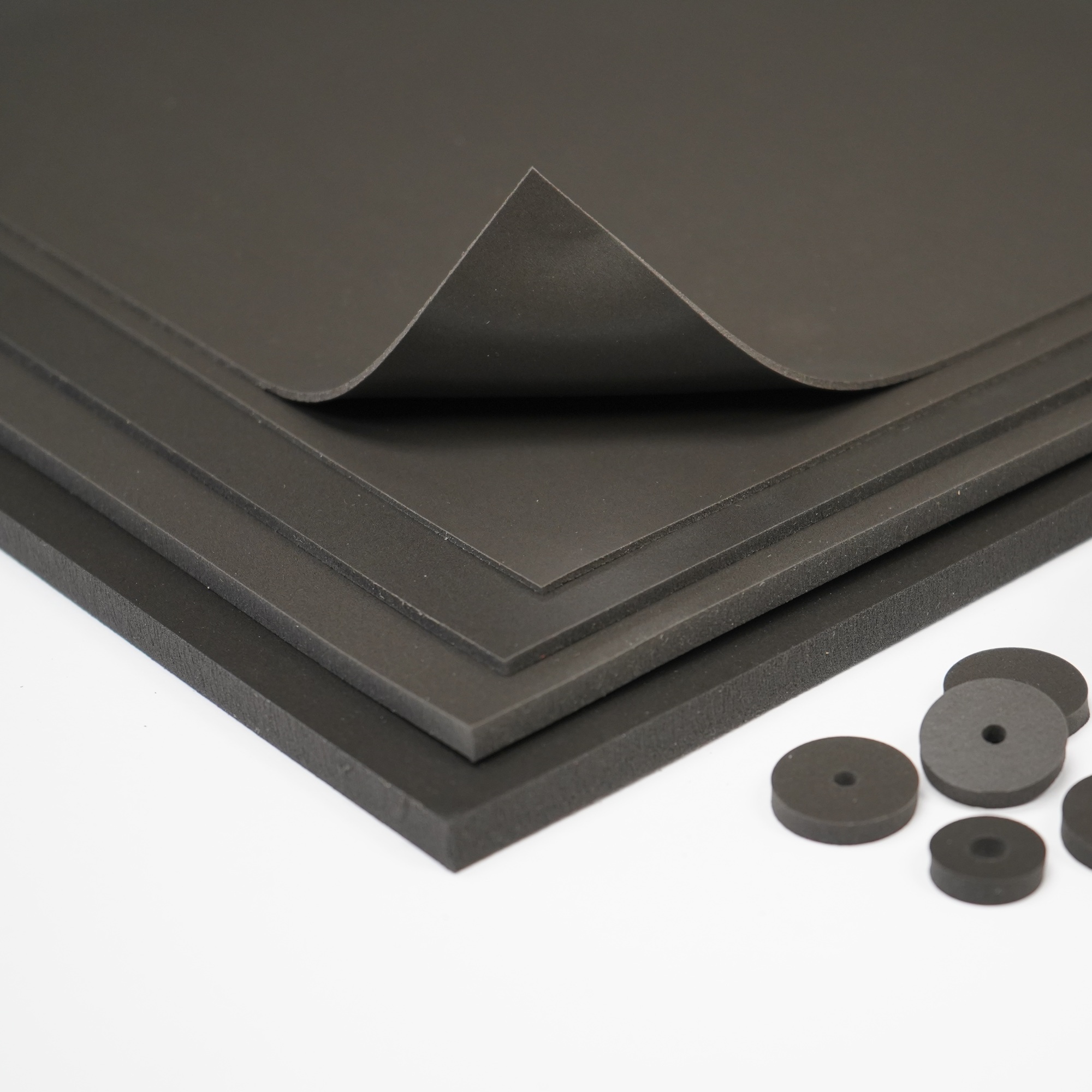
The synthesis of soft matter intelligence with circuit-driven logic has enabled a new class of robots that perform complex tasks or conform to specialized form factors in unique ways that cannot be realized through conventional designs. Translating this hybrid approach to fluidic systems, the present work addresses the need for sheet-based circuit materials by leveraging the innate porosity of foam—a soft material—to develop pneumatic components that support digital logic, mixed-signal control, and analog force sensing in wearables and soft robots. Analytical tools and experimental techniques developed in this work serve to elucidate compressible gas flow through porous sheets, and to inform the design of centimeter-sized foam resistors with fluidic resistances on the order of 10^9 Pa s m^(−3). When embedded inside soft robots and wearables, these resistors facilitate diverse functionalities spanning both sensing and control domains, including digital logic using textile logic gates, digital-to-analog signal conversion using ladder networks, and analog sensing of forces up to 40 N via compression-induced changes in resistance. By combining features of both circuit-based and materials-based approaches, foam-enabled fluidic circuits serve as a useful paradigm for future hybrid robotic architectures that fully embody the sensing and computing capabilities of soft fluidic materials.
Sheet-based fluidic diodes for embedded fluidic circuitry in soft devices
VT Vo, A Rajappan, B Jumet, MD Bell, S Urbina, DJ Preston
Advanced Intelligent Systems 6, 2300785 (2024)
https://doi.org/10.1002/aisy.202300785
The recent development of soft fluidic analogs to electrical components aims to reduce the demand for rigid and bulky electromechanical valves and hard electronic controllers within soft robots. This ongoing effort is advanced in this work by creating sheet-based fluidic diodes constructed from readily available flexible sheets of polymers and textiles using a layered fabrication approach amenable to manufacturing at scale. These sheet-based fluidic diodes restrict reverse flow over a wide range of differential pressures—exhibiting a diodicity (the ratio of resistance to reverse vs forward flow) of approximately 100×—to address functional limitations exhibited by prior soft fluidic diodes. By harnessing the diode’s highly unidirectional flow, soft devices capable of 1) facilitating the capture and storage of pressurized fluid, 2) performing Boolean operations using diode logic, 3) enabling binary encoding of circuits by preventing interactions between different pressurized input lines, and 4) converting oscillating input pressures to a direct current-like, positively phased output are realized. This work exemplifies the use of fluidic diodes to achieve complex patterns of actuation and unique capabilities through embedded fluidic circuitry, enabling future development of sheet-based systems—including wearable and assistive robots made from textiles—as well as other soft robotic devices.
Thermally accelerated curing of platinum-catalyzed elastomers
TF Yap, A Rajappan, MD Bell, RM Rasheed, CJ Decker, DJ Preston
Cell Reports Physical Science 5, 101849 (2024)
https://doi.org/10.1016/j.xcrp.2024.101849
Silicone elastomers exhibit extraordinary compliance, positioning them as a material of choice for soft robots and devices. To accelerate curing times of platinum-catalyzed silicone elastomers, researchers have employed elevated temperatures; however, knowledge of the requisite duration for curing at a given temperature has remained limited to specific elastomers and has relied primarily on empirical trends. This work presents an analytical model based on an Arrhenius framework coupled with data from thermo-rheological experiments to provide guidelines for suitable curing conditions for commercially available addition-cured platinum-catalyzed silicone elastomers. The curing reaction exhibits self-similarity upon normalizing to a dimensionless reaction coordinate, allowing quantification of the extent of curing under arbitrary time-varying thermal conditions. Mechanical testing revealed no significant changes in properties or performance as a result of thermally accelerated curing. With this framework, higher throughput of elastomeric components can be achieved, and the design space for elastomer-based manufacturing can be developed beyond conventional casting.
Adhesion force analysis for prevention of particle resuspension in multiplexed inertial coalescence filters
RM Rasheed, JM Lentz, IM Zobayed, Z Liu, A Rajappan, D Gonzalez, DJ Preston
Aerosol Science and Technology 55, 276–287 (2024)
https://doi.org/10.1080/02786826.2024.2305822
Fine airborne particles (< 10 µm) pose challenges for engineered systems, human health, and environmental pollution. This work investigates the relative influences of van der Waals and capillary adhesion forces during filtration to guide the design of multiplexed inertial coalescence filters, which are constructed with a parallel series of helical passageways designed for low pressure drop (<150 Pa) and capture of fine particulate matter (5–50 μm). Specifically, we experimentally quantified the influence of particle adhesion forces on filtration efficiency for capture of 6.1 µm activated carbon particle clusters. Filtration efficiency for dry filters, where van der Waals adhesion forces dominate, is significantly diminished beyond a threshold flowrate due to the Saffman lift force, which causes wall-bound particle clusters to detach from the interior filter surfaces. For wetted filters, the capillary adhesion force is orders of magnitude greater than the Saffman lift force, and consequently the filtration efficiency is not adversely affected. We developed models for filter pressure drop and filtration efficiency accounting for the influence of particle adhesion forces; these models showed good agreement with experimental results. Filter quality factor (QF) was determined for varying particle sizes and flowrates and can be used as a design guideline for use-case-specific filter optimization, which is enabled by the customizable additive manufacturing approach used to fabricate the filters. Due to its versatility and low-pressure-drop nature, this filtration approach could find use in heating, ventilation, and air conditioning (HVAC), large particle and dust filtration in industrial processes, cleanroom pre-filtration, and beyond.